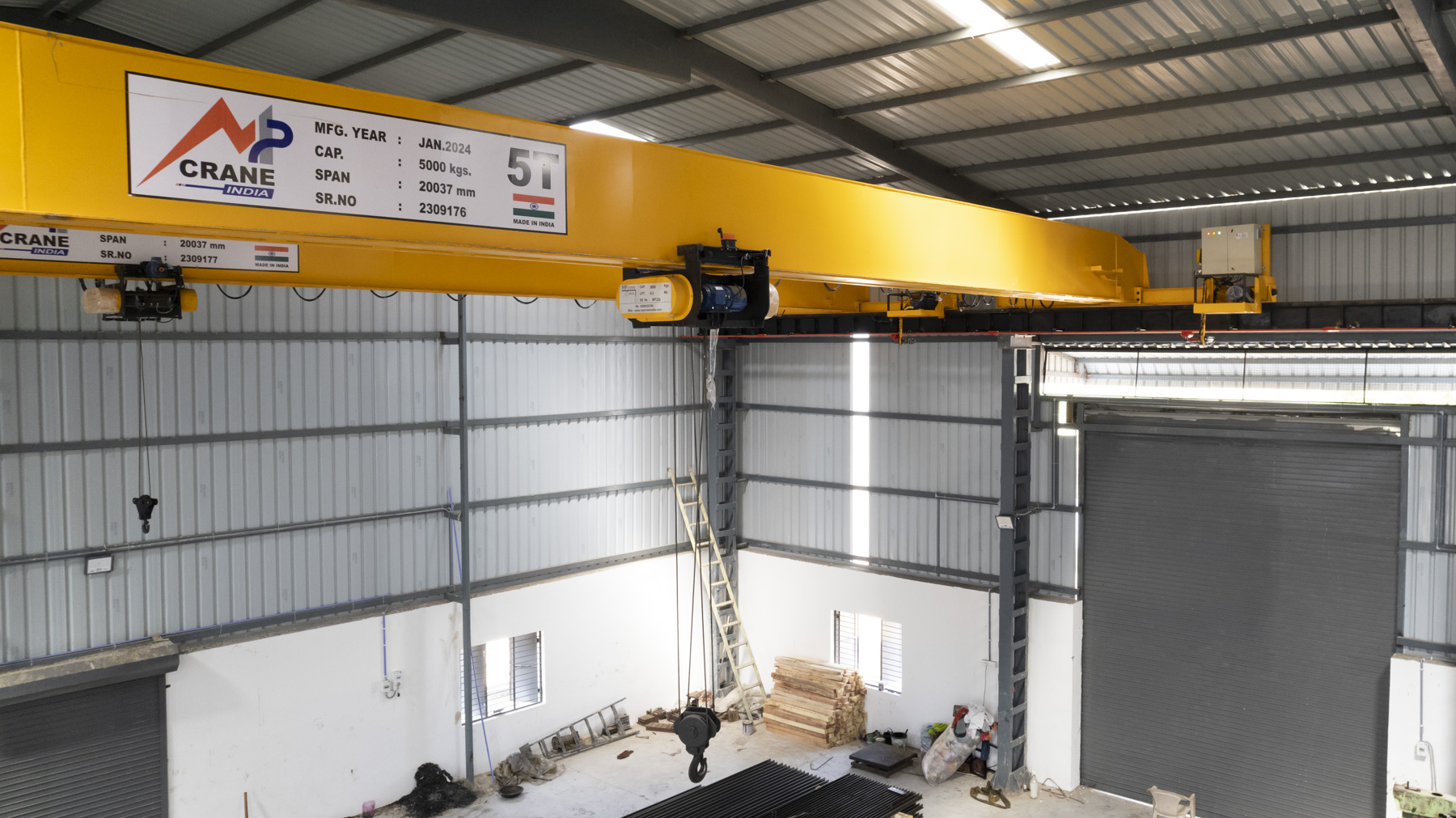
If you’ve spent any time on a factory floor, you’ve probably seen a crane gliding overhead, picking up something that would otherwise need ten people and a lot of luck. Most of the time, that’s an EOT crane at work. But here’s the thing: not every EOT crane is built the same way, and if you’re dealing with genuinely heavy loads, there’s a good chance you actually need a double girder version, not a single girder one.
Let’s get into what that actually means, without the technical fog.
So, What Exactly Is a Double Girder EOT Crane?
EOT stands for Electric Overhead Traveling. Simple enough, it’s a crane that travels along an elevated track and moves loads across a facility. The “double girder” part refers to how the bridge is built. Instead of one beam carrying everything, you’ve got two beams running parallel to each other, and the trolley sits right on top of them.
Why does that matter? Because when the trolley rides on top instead of hanging underneath a single beam, you get a stronger structure overall. That means it can lift heavier things, cover wider spans without sagging, and give you more usable height under the hook.
How Does It Actually Work?
Nothing overly complicated here. The bridge, which the two girders rest on, rests on end trucks, and those trucks run along rails fixed high up on either side of the building. A trolley moves back and forth on top of the girders, and that trolley carries the hoist, which does the actual lifting.
So you’ve got three types of movement happening together: the bridge moving one way down the length of the shed, the trolley moving across it, and the hoist going up and down. Combine all three, and an operator, whether they’re in a cabin, using a pendant, or working off a wireless remote, can place a load pretty much anywhere in the workspace.
Why Plants Prefer This Over Single Girder Cranes
Honestly, it comes down to a handful of practical reasons:
It can lift more. Two girders share the load instead of one carrying it all, so you’re looking at capacities that can comfortably go beyond 50 tons, depending on the design.
You get more hook height. Since the trolley isn’t hanging below the beam, you don’t lose as much vertical space. In buildings where roof height is already tight, this makes a real difference.
Longer spans without the sag. If your shop floor is wide, a single girder starts to struggle. Double girder setups handle that width much more comfortably.
It just feels sturdier. There’s less flex, less bounce under load, and that translates to smoother, more controlled lifts something operators genuinely notice over time.
It lasts. Built well and maintained properly, these cranes tend to run for years without major issues, which matters a lot if you’re running multiple shifts and can’t afford downtime.
Where You’ll Typically Find These Cranes
You’ll see double girder EOT cranes doing the heavy lifting literally in places like steel and metal fabrication units, automobile plants, cement factories, power stations, heavy engineering workshops, shipyards, and large warehouses handling bulky, high-tonnage goods.
Basically, if your daily operations involve moving heavy machinery, raw material, or finished heavy products, this is usually the crane type that makes more sense than a single girder one.
What to Think About Before You Buy One
A few things worth sitting down and working out before you commit to a purchase:
- How much weight are you actually lifting, on an average day and at peak?
- What’s your span and required hook height? Get actual measurements, not estimates.
- How intensively will the crane be used occasional lifts or near-constant duty cycles?
- Does it come with proper safety features like overload protection, limit switches, and anti-collision systems?
- What happens after the sale is servicing and spare parts support actually reliable?
That last point tends to get overlooked, and it shouldn’t. A crane is only as good as the support behind it once it’s up and running.
Picking the Right Manufacturer Actually Matters
Here’s something a lot of buyers realize a little too late: the crane’s specifications on paper only tell half the story. Who builds it, and who’s around to support it later, matters just as much. Working with an established double girder EOT crane manufacturer in Ahmedabad tends to pay off, mainly because local manufacturers understand the operating conditions here, respond faster when something needs attention, and can often customize the build to fit your exact shed and layout.
Ahmedabad’s industrial base has grown a lot over the years, and with it, the need for reliable material handling equipment has grown too. It’s not surprising that more businesses are actively looking for a dependable double girder overhead crane in Ahmedabad, one that’s engineered properly, backed by good after-sales service, and built to handle the kind of heavy-duty work local industries actually deal with day to day.
Wrapping Up
At the end of the day, a double girder EOT crane isn’t just another piece of equipment sitting in your facility; it’s something your entire production line ends up depending on. Get the specifications right, ask the right questions, and pick a manufacturer who’ll actually be there when you need support down the line. Do that, and you’ll likely get years of smooth, safe operation out of it.
If you’re still comparing options, take your time with it. Talk to a few manufacturers, ask about past installations similar to your setup, and don’t just go with the lowest quote. A crane is one of those investments where cutting corners early usually costs more later.