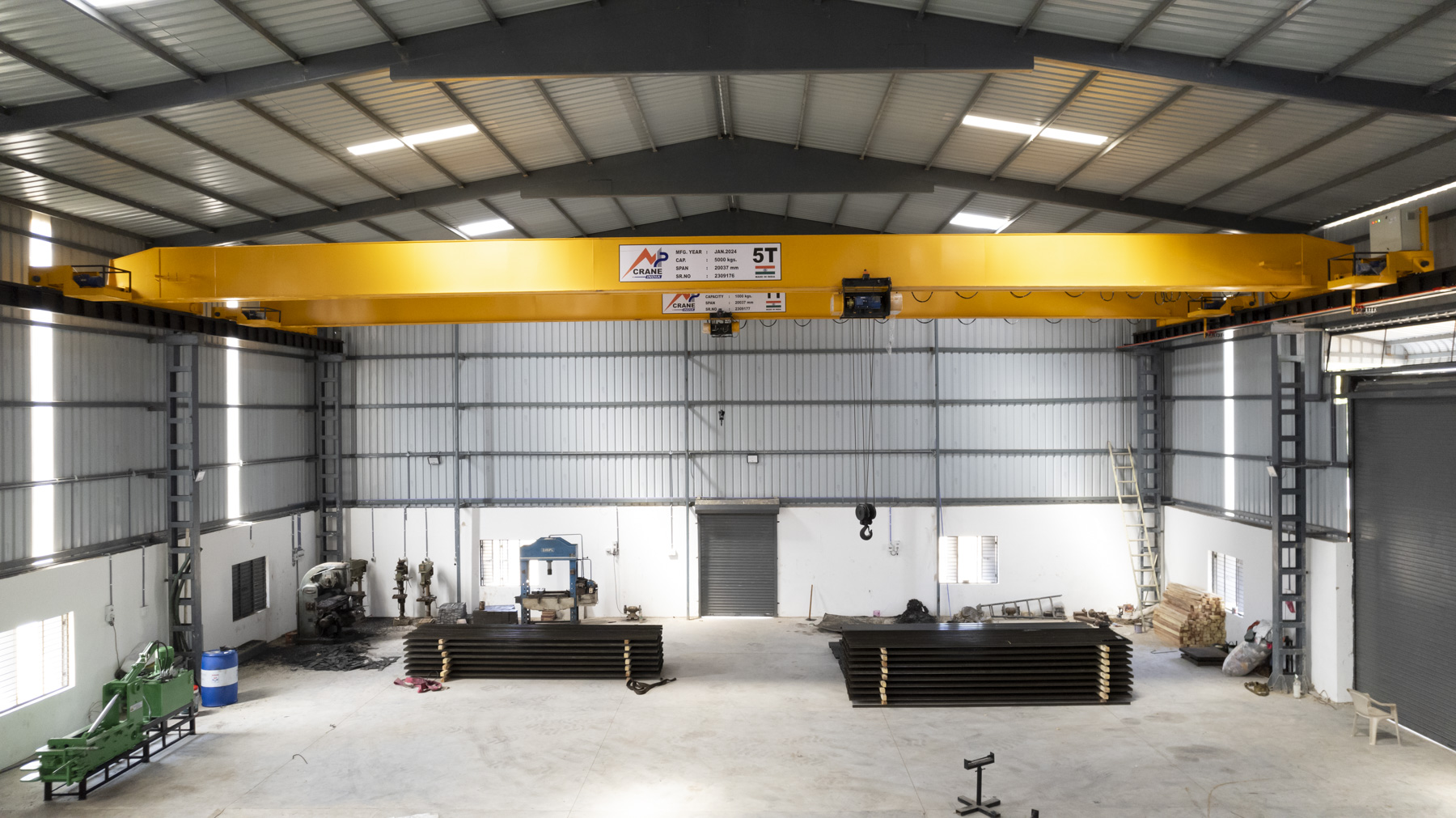
Walk into any busy fabrication shop, steel plant, or warehouse in Gujarat, and you’ll notice one thing. The overhead crane is the quiet backbone of the whole operation. When it runs well, nobody talks about it. When it breaks down, everyone does.
For years, the double girder EOT crane has been the go-to choice for heavy lifting. But the crane your plant bought ten years ago is not the same machine being built today. Technology has moved quickly, and the changes are practical, not just flashy.
If you’re planning an upgrade or a new installation, here are the innovations worth knowing about.
Why Double Girder Cranes Still Lead Heavy Lifting
Before the new features, a quick refresher. A double girder EOT (Electric Overhead Traveling) crane uses two parallel girders, with the hoist running on rails over them. This gives you:
- Higher lifting capacity, often well beyond what single girder cranes can handle
- Greater hook height, since the hoist sits between or above the girders
- Longer spans without compromising stability
- Better suitability for continuous, heavy-duty work
That strong foundation is exactly why manufacturers keep building new technology on top of it.
1. VFD Control: Smooth Starts, Smoother Stops
Older cranes often lurched on start and jerked on stop. That’s hard on the load, the structure, and the operator.
Variable Frequency Drives (VFDs) fix this by controlling motor speed gradually. The benefits are easy to see on the shop floor:
- Less swinging of the load
- Reduced mechanical stress on gearboxes and brakes
- Precise inching for delicate positioning
- Lower power consumption
If you only upgrade one thing on an older crane, this is often the most noticeable improvement.
2. Anti-Sway Technology
A swinging load is a safety risk and a time-waster. Operators used to wait for the swing to settle, or compensate by feel, which takes years of experience.
Modern anti-sway systems use sensors and control logic to damp that motion automatically. The result is faster cycle times and safer handling, especially for long, bulky items like steel coils, pipes, and machinery components. New operators also get up to speed much faster.
3. IoT-Based Condition Monitoring
This is where cranes are getting genuinely smart. Sensors installed on motors, gearboxes, hoists, and brakes track things like:
- Operating hours and duty cycles
- Motor temperature and vibration
- Load patterns and overload events
- Brake wear
All of this data can be viewed on a dashboard or even your phone. Instead of guessing the condition of your crane, you can see it.
4. Predictive Maintenance Instead of Breakdown Maintenance
Here’s the real payoff of monitoring. Traditionally, plants either fixed things after they failed or serviced them on a rigid calendar, whether needed or not.
Predictive maintenance sits in between. The system flags early warning signs, such as a bearing running hotter than normal, so your team can plan a repair during a scheduled shutdown. A breakdown in the middle of a production run can cost far more than the repair itself, so catching problems early protects both your budget and your delivery commitments.
5. Wireless and Remote Operation
Operators no longer need to be stuck in a cabin or tethered to a pendant. Radio remote controls let them walk alongside the load, see it from the best angle, and stay clear of hot, noisy, or hazardous zones.
In foundries, forging units and chemical plants, this alone is a meaningful safety upgrade. It also tends to improve placement accuracy because the operator’s eyes are exactly where they need to be.
6. Collision Avoidance and Smart Safety Systems
Plants with multiple cranes on the same bay know the risk well. Modern cranes can include:
- Anti-collision sensors that slow or stop cranes approaching each other
- Zone restriction, which keeps a crane out of areas it shouldn’t enter
- Overload protection with real-time load display
- Limit switches and fail-safe braking as standard
Safety used to be an add-on. Increasingly, it’s built into the design.
7. Energy-Efficient and Regenerative Drives
Power bills matter, especially in energy-intensive industries. Efficient motors and regenerative drives can feed energy back into the system while a load is being lowered, instead of wasting it as heat. Over years of operation, this adds up to real savings.
8. Automation and Semi-Automatic Operation
Fully automated cranes aren’t needed everywhere, but semi-automation is gaining ground. Repeated tasks, like moving material between fixed points, can be programmed so the crane does them consistently, at the push of a button. This reduces human error, improves throughput, and frees skilled operators for tasks that need judgment.
9. Modular and Customized Design
No two plants are alike. Newer manufacturing approaches allow cranes to be tailored to span, duty class, ambient conditions, and building constraints, rather than forcing your plant to adapt to a standard model. Corrosion-resistant coatings, explosion-proof components, and special hoists for tough environments are all more accessible now.
Choosing a Double Girder EOT Crane Manufacturer in Ahmedabad
Ahmedabad and the wider Gujarat belt are home to engineering, pharma, textile, steel, chemical and auto-component industries, so demand for dependable lifting equipment is high. Working with a local double girder EOT crane manufacturer in Ahmedabad has practical advantages:
- Faster site visits for measurement, installation and commissioning
- Quicker service response when something needs attention
- Easier spare parts access, which cuts downtime
- Better understanding of local conditions like heat, dust, and industrial environments
When you evaluate any manufacturer, ask these questions:
- Do they design the crane around your duty cycle, or just sell a catalogue model?
- Which of the innovations above are available, and which are optional?
- What does after-sales support look like?
- Can they show completed installations similar to your application?
- Do they follow recognized safety and quality standards?
A good manufacturer will answer these openly and won’t push you toward features you don’t need.
Are You Looking for a Double Girder Overhead Crane in Ahmedabad?
If you’re searching for a double girder overhead crane in Ahmedabad, start by clarifying a few basics before you contact anyone:
- Maximum load you need to lift, plus future growth
- Span and lifting height
- Working hours and duty class
- Indoor or outdoor use
- Which smart features actually make sense for your budget
Having these ready makes quotes more accurate and conversations far more productive.
Is Upgrading Worth It?
Not every plant needs every feature. A small workshop running a few lifts a day may be perfectly happy with VFD control and a good remote. A busy production line running multiple shifts will see much bigger returns from monitoring, anti-sway and automation.
The honest question to ask is: where does my crane cost me the most today, in downtime, in safety risk, or in wasted time? Start there, and let the answer guide which innovation you invest in first.
Frequently Asked Questions
What is the main difference between single and double girder EOT cranes?
Double girder cranes use two girders, which allows higher capacity, longer spans, and greater hook height than single girder designs.
Can older double girder cranes be upgraded with new technology?
In many cases, yes. VFDs, radio remotes, anti-collision sensors, and monitoring systems can often be retrofitted, depending on the crane’s condition and design.
How often should an EOT crane be inspected?
Daily operator checks, regular scheduled maintenance, and periodic detailed inspections by qualified professionals are all recommended. Your manufacturer can suggest a schedule based on your duty class.
Is a double girder overhead crane in Ahmedabad suitable for outdoor use?
It can be, with the right design, protective coatings, and weather protection. Share your site conditions with the manufacturer so they can specify it properly.
Final Thoughts
Double girder EOT cranes have come a long way from simple lift-and-travel machines. Smarter controls, better safety, real-time data, and energy efficiency are changing what plants can expect from their cranes. The best choice is the one that fits your operation, built by a team that stays with you after installation.
If you’re planning a new crane or modernizing an existing one, talk to an experienced local manufacturer, share your real requirements, and ask for a solution built around them.
Ready to discuss your lifting requirements? Contact MP Crane India today for a free consultation and quote on double girder EOT cranes in Ahmedabad.