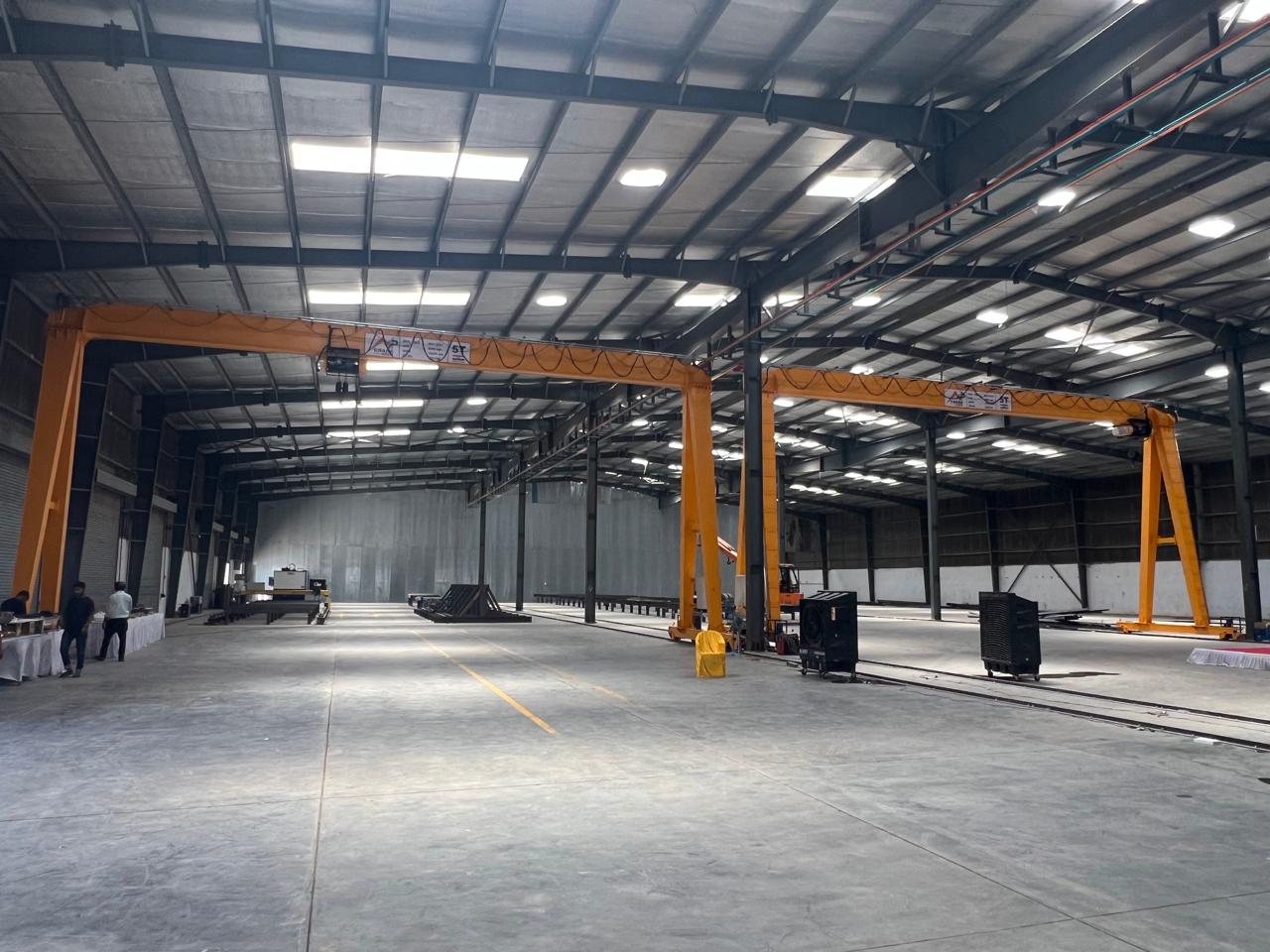
If you’ve ever walked through a fabrication yard or a busy warehouse floor, you’ve probably noticed a gantry crane at work without even thinking twice about it. They’re everywhere in Indian manufacturing and for good reason. Unlike overhead cranes that need a building designed around them, gantry cranes stand on their own legs, quite literally, which makes them a practical choice for plants that can’t or don’t want to invest in fixed runway structures.
At MP Crane India, we spend a lot of time talking to plant heads and procurement managers who are trying to figure out which type of gantry crane actually fits their operation. It’s a fair question, because “gantry crane” isn’t really one product; it’s a category, and the differences between the types matter a lot once you get into daily use. This guide walks through the main types you’ll come across when speaking to any gantry crane manufacturer in India, along with a few pointers on how to pick between them.
Why So Many Businesses Go With Gantry Cranes
Before getting into the types, it helps to understand why gantry cranes are such a common choice in the first place. A few reasons come up again and again in conversations with our clients:
They’re cheaper to install than overhead systems, since there’s no need to reinforce the building or install runway beams. They can be used outdoors just as easily as indoors, something an EOT crane simply can’t do. And depending on the model, they can be moved around the facility, which is a big deal for businesses whose layout changes from project to project.
That said, “gantry crane” covers a lot of ground. Here’s a breakdown of what’s actually out there.
The Main Types of Gantry Cranes
Single Girder Gantry Crane
This is the entry point for most buyers. A single beam carries the hoist and trolley, keeping the structure light and the price reasonable. For workshops handling loads up to around 10-15 tonnes, this is usually more than enough, and it’s the model we recommend most often to smaller manufacturing units that don’t need to lift particularly heavy or oversized components.
Double Girder Gantry Crane
Once loads start climbing past 15-20 tonnes, or when headroom is tight, the conversation usually shifts to a double girder setup. As a double girder gantry crane manufacturer, we build these with two parallel beams instead of one, which spreads the load and allows for capacities well beyond 50 tonnes in some configurations. The trolley also sits on top of the girders rather than hanging below them, so you lose less height to the crane structure itself — something that matters a lot in shipyards, steel plants, and any facility where every metre of vertical clearance counts.
Portable Gantry Crane
Not every job needs a permanent installation. That’s where a portable gantry crane comes in. Mounted on wheels or castors, it can be rolled from one bay to another, or even loaded onto a truck for use at a different site altogether. As a portable gantry crane manufacturer, we see the most demand for these from:
- Small workshops whose floor layout changes often
- Maintenance teams that need a temporary lift for a specific job
- Businesses that want crane capability without committing to fixed infrastructure
They generally won’t match the tonnage of a fixed double girder crane, but for flexibility, nothing beats them.
Semi-Gantry Crane
This one’s a bit of a hybrid. One end of the crane runs along an elevated rail, much like a regular overhead crane, while the other end sits on floor-mounted legs. It’s a useful workaround when a facility has space or structural limits that rule out a full gantry on both sides; you get some of the benefits of an overhead system without needing the building to support the entire span.
Adjustable Height Gantry Crane
As the name suggests, the legs on this crane can be raised or lowered depending on what’s being lifted and where. It’s a good fit for operations that deal with a mix of load sizes or uneven workspace heights; rather than buying two or three cranes for different jobs, one adjustable unit can often cover the range.
Cantilever Gantry Crane
Here, the girder extends past the support legs on one or both ends, which stretches the working area without needing a wider rail base underneath. This comes in handy in storage yards where material is often stacked beyond the crane’s standard footprint.
Gantry Crane or EOT Crane: Which Should You Pick?
This question comes up constantly, so it’s worth addressing directly. Gantry cranes and EOT (Electric Overhead Traveling) cranes solve similar problems in different ways, and the right choice really depends on your building and your budget.
| Factor | Gantry Crane | EOT Crane |
| Installation | Floor-mounted, no runway structure needed | Needs overhead runway beams built into the structure |
| Mobility | Can be fixed or portable | Fixed within the building span |
| Best for | Yards, workshops, temporary or outdoor setups | Indoor plants with frequent, repeated lifting |
| Cost | Usually lower upfront | Higher, due to structural work involved |
If your building already has the structural strength for runway beams and you’re doing high-frequency indoor lifting, an EOT crane tends to make more sense long-term. As an EOT crane manufacturer in India ourselves, we often end up recommending EOT systems to clients running continuous production lines — but for anyone without that existing infrastructure, or who needs to work outdoors, gantry remains the more practical route.
What to Look for in a Manufacturer
Picking the crane type is only half the decision. The manufacturer you go with matters just as much, and it’s worth spending time on this before signing anything. A few things we’d suggest checking:
Does the manufacturer actually customise for your load and application, or are you being sold a standard catalogue model that’s close enough? Are the safety certifications and compliance documentation in order — this isn’t optional in India’s current regulatory environment. What does after-sales support look like, and can they realistically service the crane once it’s installed? Has the company handled projects similar in scale to yours before?
None of this is complicated, but it’s easy to overlook when you’re focused on price alone.
Where MP Crane India Fits In
We’ve built our name as a gantry crane manufacturer in India by working closely with plant heads and industry owners who need equipment built around their actual operation, not a generic spec sheet. Our range covers single and double girder gantry crane systems, custom portable gantry crane builds for teams that need to move fast, and EOT crane installations for facilities running continuous indoor operations.
Wrapping Up
There’s no single “best” gantry crane; the right one depends on how much weight you’re lifting, how much space you have, and whether that setup needs to move around your facility or stay put. Single girder, double girder, portable, semi-gantry, adjustable, and cantilever each solve a slightly different problem, and getting this choice right early on saves a lot of hassle later.
If you’re weighing up your options, it’s worth talking to a manufacturer who’ll ask about your operation before recommending a model. Reach out to MP Crane India, and we’ll help you figure out exactly what fits.