Introduction
Walk into almost any large steel plant, power station, or heavy fabrication unit, and you’ll notice the same thing overhead: a double girder crane doing the heavy lifting, quite literally. That’s not a coincidence. As production volumes grow and loads get heavier, plant managers keep coming back to one type of crane over all the others.
At MP Crane India, we’ve spent years designing and installing cranes for factories that can’t afford downtime or a lifting failure. Over that time, a pattern has become obvious: when the job involves serious weight, long spans, or round-the-clock operation, industries lean toward double girder overhead cranes almost every time. Here’s why, and what it means if you’re evaluating a double girder EOT crane manufacturer in Ahmedabad for your own facility.
What Exactly Is a Double Girder EOT Crane?
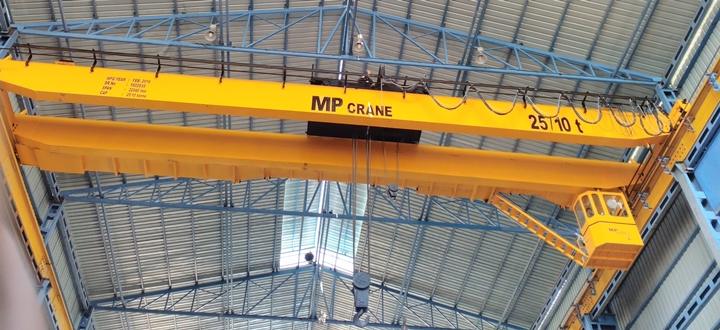
The name gives away the basic idea. Instead of one beam supporting the crane bridge, there are two, running parallel to each other. The trolley and hoist sit on top of these girders rather than hanging beneath a single beam, which is how single girder cranes are built.
That small design difference changes a lot. It’s the reason double girder EOT cranes can lift heavier loads, reach higher, and hold up better under constant use.
What Makes Industries Choose Double Girder Over Everything Else
1. They Simply Lift More
This is usually the deciding factor. Because the load is spread across two girders instead of one, double girder overhead cranes can handle far heavier loads than their single girder counterparts. Steel mills, foundries, cement plants, and heavy machinery units routinely need this extra capacity, and single girder systems just don’t cut it.
2. More Room to Lift
Because the trolley rides on top of the girders rather than below them, you get a noticeably higher hook height. In practice, that means less wasted vertical space. For warehouses with tall racking or pits that go several meters down, that extra clearance changes what’s actually possible on the shop floor.
3. They Don’t Flex Under Pressure
Anyone who’s watched a crane sag slightly under a heavy load knows why stability matters. The dual-girder structure resists deflection far better, which isn’t just a comfort thing; it’s a safety and longevity issue. Less flex means less wear on the crane itself and on the building structure supporting it.
4. Long Spans, No Problem
Big manufacturing sheds need cranes that can travel across wide floors without losing structural integrity. Double girder overhead cranes are built for exactly this. If your facility spans a large footprint, this is often where single girder options start to fall short.
5. Safety That Holds Up Under Pressure
Nobody wants to cut corners on safety, especially when you’re moving multi-ton loads over people and equipment. Double girder EOT cranes typically come with stronger braking systems, overload protection, and more predictable load paths, features that matter a great deal when the stakes are high.
6. Built to Run, Not Just Lift
Some cranes are built for occasional use. Double girder cranes are built for plants running two or three shifts a day, year after year. That durability translates directly into fewer breakdowns and lower long-term maintenance costs, something any plant manager can appreciate.
7. Built Around Your Actual Operation
No two factories work exactly the same way, so a good double girder EOT crane manufacturer won’t hand you a one-size-fits-all crane. Capacity, span, lifting speed, control systems- all of it can be tailored to how your facility actually operates, rather than forcing you to adapt to a generic setup.
So, How Does This Compare to Other Lifting Options?
Single girder cranes, gantry cranes, jib cranes- they all have their place, and for lighter, occasional lifting, they can be the more economical choice. But once you’re dealing with heavy, repetitive lifting, most of them start to show their limits. They simply aren’t built for the load capacity, span, or hook height that double girder overhead cranes handle without breaking a sweat.
For industries like automotive manufacturing, steel processing, power generation, or shipbuilding, where heavy lifting happens daily, the upfront cost of a double girder crane tends to pay for itself many times over.
Why Work With MP Crane India
Picking the right crane is only half the equation; the manufacturer behind it matters just as much. As an established EOT crane manufacturer, MP Crane India combines engineering know-how with a genuine focus on safety and durability, not just specs on paper.
Here’s what our clients tell us they value most:
- Real engineering input, not guesswork. Every crane is designed around your actual load, layout, and workflow.
- Materials and fabrication built to last, not just to pass inspection.
- Custom specifications rather than a catalog crane forced to fit your facility.
- Service that doesn’t disappear after installation, with support available across India.
- Compliance with recognized safety standards, because that’s non-negotiable.
Whether you’re running a steel plant, a fabrication unit, or a large distribution warehouse, we can help you figure out exactly what kind of double girder EOT crane fits your operation, not just what’s easiest to sell.
The Bottom Line
Double girder EOT cranes have earned their reputation the hard way, through years of heavy use in demanding industrial settings. They lift more, last longer, and hold up better than most alternatives on the market, which is exactly why so many industries default to them.
If you’re comparing double girder EOT crane manufacturers for your next project, MP Crane India would welcome the conversation. As one of the more established overhead crane manufacturers in Ahmedabad, we’d rather talk through your actual requirements than push a standard product.
Reach out to MP Crane India to talk through your double girder overhead crane needs; we’re happy to walk you through the options.